Month: June 2026

Top Tips for Handling Your Employee’s Personal Crisis

Top Tips for Handling Your Employee’s Personal Crisis

Leaders must either invest a reasonable amount of time attending to fears and feelings, or squander an unreasonable amount of time trying to manage ineffective and unproductive behaviour.

Personal crises, such as bereavement, divorce, illness, and mental health challenges, are a reality of life, and how you respond when your employee is struggling says everything about you as a leader. Handle the situation badly and you risk losing a good person. Handle it well and you’ll not only be doing the right thing, but you could also forge one of the most loyal working relationships of your career.

Running a business is a human endeavour, and as such, every business leader will eventually find themselves faced with a skilled, reliable employee who starts showing signs that something is deeply wrong outside of work. Maybe their performance dips suddenly, or perhaps they’re distracted, tearful, or inexplicably short-tempered? Maybe they even come to you directly and share something deeply private? In that moment, you’re no longer just an employer managing output and payroll. You become, whether you’re ready for it or not, a human being navigating someone else’s pain. The way small business owners handle these moments has a profound effect not only on the individual concerned, but on team morale, workplace culture, and the long-term health of the business itself. Here’s what you need to do.

Create a safe space for the conversation

The first, and often hardest, step is simply opening the door. Many managers notice something is wrong but say nothing, hoping it will resolve itself. If you observe a genuine change in an employee’s behaviour or performance, it is important that you request a quiet, private meeting and approach it gently. Avoid framing it as a performance issue at this stage. Instead, lead with concern, “I’ve noticed you haven’t seemed yourself lately. Is everything okay?” That single question can be transformative. It signals that you see the person, not just the output. During this conversation you should simply listen, acknowledge what you are hearing and resist the temptation to offer advice or opinions. In short, be a decent human rather than a boss. 

Know your obligations (and your limits)

Once you understand the situation, it’s important to consider both your legal responsibilities and your personal boundaries. Depending on the nature of the crisis, you may have obligations around statutory sick pay, flexible working requests, or reasonable adjustments. Reread your employment contracts and HR policies. If your business doesn’t yet have clear wellbeing policies, this is a timely moment to create them. We will be able to help you establish budgets for contingencies such as freelancer assistance or added sick leave.

Equally, be honest with yourself about what you can and cannot provide. You are not a counsellor, and it is neither fair nor appropriate to position yourself as one. Pointing the employee towards professional support, your Employee Assistance Programme if you have one, or external resources is neither cold nor unreasonable.

Agree on a practical plan together

Once the initial conversation has taken place, work collaboratively with your employee to agree on a short-term plan. This might involve a temporary reduction in hours, a period of remote working, adjusted responsibilities, or a phased return following their absence. The key word here is collaboratively. Imposing a solution, however well-intentioned, can feel patronising and could risk legal issues. Asking what would help communicates respect and encourages autonomy at a moment when the person may feel they have very little control over their own life. Document whatever is agreed, not to create a paper trail, but to give both parties clarity and to prevent misunderstandings further down the line.

Privacy is paramount

Whatever an employee chooses to disclose, they are placing enormous trust in you. Do not share the details of their situation with colleagues or outsiders, even with the best intentions. If their absence or change in role requires some explanation to the wider team, keep it vague: “[Name] is dealing with a personal matter and we’re supporting them through it.” That is sufficient. Even well-meaning gossip can be devastating to someone already feeling vulnerable. And it also sends a powerful signal to every other member of your team about how their own confidences might be handled in the future.

Check in, don’t check up

Once a plan is in place, maintain regular, low-pressure contact. A brief message or a five-minute conversation every week or two shows continued care without adding pressure. There is a meaningful difference between checking in and checking up, which can feel like surveillance. As time passes, gently begin to reintegrate normal expectations, always communicating changes clearly and compassionately rather than simply shifting the goalposts.

The bottom line

Employees who are supported through personal crises often emerge more committed, more resilient, and more loyal than before. That outcome doesn’t happen by accident. It happens because someone in a position of authority chose to lead with humanity.


The Small Business Trends You Should Be Paying Attention To

The Small Business Trends You Should Be Paying Attention To

Small business success in this economy isn't about the 'next big thing' in tech; it's about the 'next small thing'

While everyone’s talking about AI, trends are emerging that show the most successful small businesses have returned to the fundamentals: maximising every minute and tightening the leaks in local operations. Running a business in today’s topsy-turvy world is all about making the machine run smoother, ensuring that every hour spent translates directly into the bottom line and this is how they are doing it.

It’s no secret that doing business has undergone significant overhauls over the last few years. The invention of AI, and the backlash to it, have led to an increase in automation, and, in turn, a recognition that customers are now more likely than ever to value the personal touch. It’s a grand shift that might leave many small business owners uncertain just where they should be putting their energy. So how do you not only navigate this environment but actually come out more profitable?

Taking a close look at successful small businesses, it’s easy to see that there are three pillars that are often responsible for allowing independent owners to thrive in these difficult market conditions.

  1. Automating administrative friction
    A clear trend has emerged where successful small businesses have started treating administrative tasks as a direct tax on their time and profit. Instead of hiring a part-time assistant or spending hours manually answering the same five questions on social media, owners are implementing “Admin-Zero” frameworks. This involves using micro-automation for customer FAQs, booking confirmations, and initial intake processes so you can focus on more personal and impactful areas.

    The barrier to entry for these tools has collapsed. Even a single-chair barbershop or a mom-and-pop consultancy can now use AI-driven frameworks as efficient alternatives to conventional manual procedures. This means that employee time is being saved in countless small ways daily. Spending that time on more productive behaviour like nurturing networks or driving sales has exponential benefits.

  2. Securing recurring revenue
    Volatility is one of the primary enemies of small businesses. To combat this, many business owners are adopting “Service Club” memberships, a model that functions as “cash flow insurance.” Customers are being encouraged to pay a modest monthly fee to receive priority bookings, a small monthly perk, or an annual benefit or service. This model shifts the customer relationship from transactional to relational. It ensures the business remains top-of-mind for the consumer while providing the owner with a financial safety net. In 2026, many of the businesses that thrive are those that have successfully converted a portion of their expected monthly income into a “subscriber base,” effectively insuring themselves against the quiet weeks that traditionally break a small business’ back.

    Working out what incentives you can offer clients in return for long-term support should be a priority for all small business owners. Your accountant can help you to both determine what incentives you would be able to offer over the long-term, as well as assist in determining the subscription prices for these services. Remember, cash flow and the ability to maintain these offerings are essential to the scheme’s success.

  3. Building loyalty loops
    Marketing has also changed. Much of today’s most effective marketing isn’t happening on the algorithm, it’s happening on the sidewalk. “Neighbourhood stacking” is the practice of collaborative loyalty loops between physical neighbours. A local cafe, a boutique, and a bookstore create a closed-loop ecosystem where a purchase at one grants a specific, meaningful benefit at the others. This leverages what many call the “golden dome” of local trust. This hyper-local synergy keeps consumer spending within the immediate community. Now, this trend is also expanding into service businesses, and through the freelancing community. For instance, a copywriter, designer and project manager may agree to offer a 15% discount on each other’s services in exchange for the initial hire of one of them.

    By “stacking” their influence, small businesses create a combined value proposition that rivals the convenience and economies of scale of much larger companies. Most customers prefer to buy local – provided the price is right. If you’re worried about the drain discounting will have on your bottom line, remember that these losses are more than mitigated by the fact that you’ve been able to reduce the cost of customer acquisition to near zero. As your accountants, we can help you to work out how best to structure any discount offers.

Non-Compliant Trust? Penalties are Piling up…

Non-Compliant Trust? Penalties are Piling up…

Trustees are reminded that compliance is mandatory, and non-compliance can result in fines and penalties."

This tax season marks an important shift for trusts, which are now subject to heightened reporting requirements, regardless of activity, as well as automated penalties for non-compliance starting on 4 May 2026. If you have a non-compliant trust, even if it is inactive, please speak to us. SARS has taken a zero-tolerance approach to trust compliance, increasing scrutiny of trust administration and automatically applying ongoing penalties and interest that can rapidly accumulate.

SARS has significantly increased its scrutiny of trust administration. What’s more, from the beginning of May 2026, automated administrative penalties apply to all non-compliant trusts – without exception. Whether a trust is active or dormant, the trustees have a legal obligation to comply with SARS requirements, and the consequences of failing to do so are now immediate and ongoing. 

What does trust compliance entail?

All trusts must:

  • File a tax return (ITR12T) annually, whether economically active or not.
  • Update and maintain trust information reflected on the SARS system.
  • Maintain a detailed organogram and records of the founder, trustees, donors, and beneficiaries.
  • Maintain strict records of financial statements, trust deeds, and minutes of trustee meetings.
  • Submit IT3(t) returns reporting detailed information on distributions and amounts vested in beneficiaries, enabling SARS to cross-reference data with beneficiaries’ personal tax returns.
  • Some trusts may also be subject to provisional tax requirements.

Who is responsible?

Trustees act as representative taxpayers of a trust in terms of the Income Tax Act and personally bear sole responsibility for ensuring full compliance. This includes maintaining accurate trust information, ensuring that all legal and tax obligations are met, and initiating deregistration processes for trusts that meet the applicable criteria.

Consequences of non-compliance

From 4 May 2026, SARS will issue a penalty assessment notice for all outstanding trust income tax returns for tax periods from 2024 onwards. Designed to encourage compliance, these penalties are applied consistently, recurring monthly until non-compliance is corrected. Monthly administrative penalties may range from R250 to R16,000 per outstanding return, depending on the trust’s taxable income for the preceding year and will accumulate until the non-compliance is corrected, up to a maximum of 35 months. It doesn’t stop there. SARS may in specific circumstances hold trustees personally liable for the trust’s tax debts, and trustees are individually and jointly liable for the trust’s tax compliance. In addition, non-compliance with SARS obligations may be regarded as a criminal offence and will attract penalties and interest. Trustees who fail to act face penalties, interest, and potential criminal charges.

What if my trust is no longer in use? 

SARS requires all registered resident trusts, without exception (and certain qualifying non-resident trusts), to meet the range of ongoing obligations. A trust’s tax compliance obligations only come to an end once it has been formally deregistered with SARS. Until this process is finalised, the trust remains active for tax purposes and is exposed to penalties for continued non-compliance. Where a trust is no longer being used for its intended purpose, trustees are encouraged to formally terminate the trust. The first step is to regularise the trust’s tax affairs by submitting all outstanding returns, settling all tax liabilities, and updating all trust information. Thereafter the trust can be formally terminated through the Office of the Master of the High Court. Once the Master has issued written confirmation of termination, trustees can ask SARS to deregister the trust for income tax purposes.

Count on our expertise

If you have a trust, active or not, and are uncertain about its compliance status, contact us for expert advice and professional assistance.

Exciting News from LOGISTA & CVRA

Exciting News from LOGISTA & CVRA

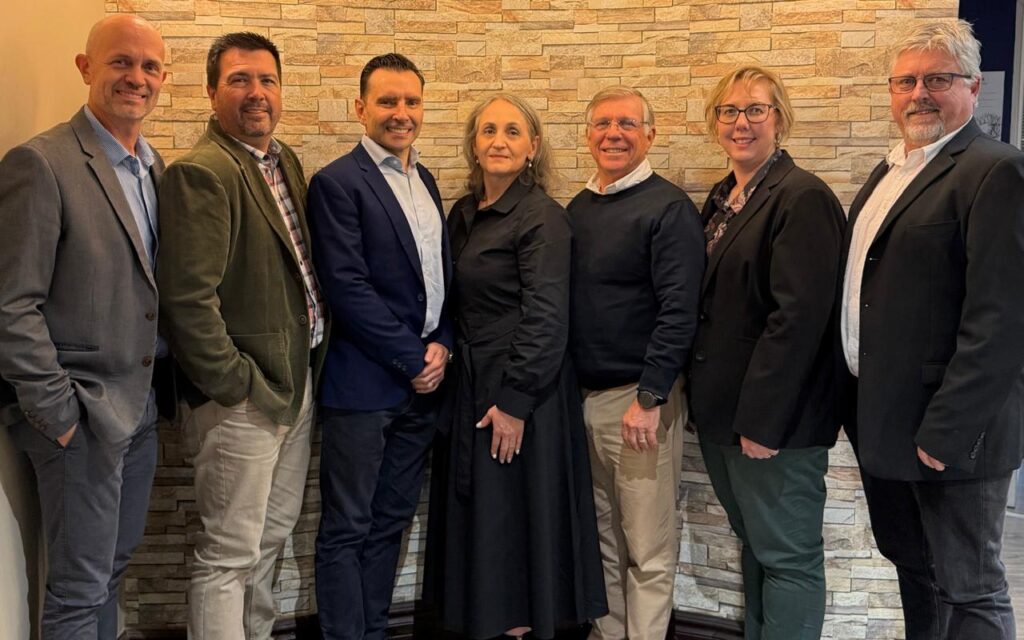
LOGISTA welcomes CVRA to the group

We are proud to announce that the LOGISTA Group is joined by CVRA Chartered Accountants and Registered Auditors, marking an exciting new chapter of growth, expanded capability, and enhanced value for our clients. This milestone brings together two established firms with aligned values, trusted relationships, and a shared commitment to delivering exceptional professional services.

By merging CVRA into the LOGISTA Group, we are strengthening our ability to support clients through an even broader and more integrated offering across audit, advisory, accounting, tax, and business support services. The addition of complementary expertise and specialist capabilities enhances the solutions we already provide, allowing us to deliver greater depth, continuity, and strategic value at every stage of our clients’ journey.

Together, we now offer a stronger platform built for the future, combining expanded technical expertise, increased capacity, and the scale to support growing and evolving businesses. This positions LOGISTA among the largest independent audit and advisory firms in Pretoria. While our capabilities continue to grow, our approach remains unchanged. Personal relationships, trusted advice, and dedicated service will continue to be at the heart of everything we do.

SUBSCRIBE TO RECEIVE
OUR NEWSLETTERS